Practical guide
Chinese New Year and UNESCO: What the 2024 Listing Means
In 2024, UNESCO inscribed a named Chinese Spring Festival social-practice element on its Representative List of the Intangible Cultural Heritage of Humanity. Read what that record recognizes, how the five decision criteria fit, and why 2024 is not the festival’s origin date.
On this page: six reading questions
What UNESCO inscribed in 2024
The precise answer is a listing of “Spring festival, social practices of the Chinese people in celebration of traditional new year”. UNESCO’s public entry places it on the Representative List of the Intangible Cultural Heritage of Humanity in 2024, and identifies nomination file No. 02126. The associated Committee decision is 19.COM 7.B.29. Keep these identifiers together when checking a caption or report.
The element is described as Chinese Spring Festival social practices: preparations, reunion meals, greetings, public festivities and the knowledge and skills passed through families, communities, education and apprenticeships. It is not the name of a single building or attraction in this entry. If a summary calls it simply a “UNESCO heritage site,” replace that vague phrase with the actual list and element name.
A useful short sentence is: “In 2024, Chinese Spring Festival social practices were inscribed on UNESCO’s Representative List of the Intangible Cultural Heritage of Humanity.” This is an original paraphrase of the record. It does not claim that all Lunar New Year traditions have one name or are covered by this particular Chinese entry.
Why the practices and their transmission matter
UNESCO’s explanation of intangible cultural heritage includes living expressions such as oral traditions, performing arts, social practices, festive events and knowledge and skills used in crafts. The important distinction is between an object and the knowledge or practice associated with it. A festival decoration can be visible, while making it, explaining it or passing a practice to someone else involves people and learned skills.
For Spring Festival, the decision explicitly describes informal transmission in families and communities, formal transmission through education, and apprenticeships for related crafts and performing arts. These are different routes. Do not treat seeing a public performance once as proof that a viewer has learned the performer’s skills, or describe every family interaction as a formal apprenticeship.
UNESCO also describes intangible heritage as traditional, contemporary and living, and as community-based. Its definition allows practices to evolve in response to their environments. Recognition therefore does not mean that every household must copy a single frozen ritual script. When discussing an actual family or community, ask how it describes its own practice; the broad entry cannot answer for that particular group.
Read the five criteria with their limits
The Committee’s decision says that, from the information included in the nomination file, the element satisfies five criteria, R.1 to R.5. The table below summarizes its findings in original wording. This reading guide follows the public decision and entry; it does not independently evaluate the nomination attachments, consent letters or filmed community statements.
On a phone, scroll inside the table to read the interpretation limit. Keyboard readers can focus the table region and use the arrow keys.
| Criterion | What the decision reports | Limit to retain |
|---|---|---|
| R.1 — living practice | The Committee identifies bearers, family and community practices, and ways of transmitting knowledge and skills. | Do not turn the summary into one compulsory household programme. |
| R.2 — contribution | The decision discusses education, food-related livelihoods, social cohesion and other sustainable-development contributions. | These findings are not a numerical forecast of every family’s income or a guarantee of good fortune. |
| R.3 — safeguarding | It describes a long-term community-based mechanism, educational integration, documentation, research and attention to risks. | Safeguarding concerns continued viability; it is not simply putting decorations in a display case. |
| R.4 — participation and consent | The decision reports a working group, material and feedback from stakeholders, and informed-consent documents. | That account describes the nomination process, not permission to photograph or publish a stranger today. |
| R.5 — inventory | It records inclusion in the national representative-element list in 2006 and a fourth inventory update finalized in 2021. | Those records are distinct from the international Representative List inscription in 2024. |
Read the middle column as what the Committee reports for this nomination. A contribution to food-related livelihoods, education or social cohesion is not an individual outcome promised to a reader. A description of prayers for good fortune explains a practice; it does not establish that an auspicious object produces wealth or health.
Similarly, the reported participation and consent in the nomination process do not replace consent for a new interview, photograph or school project. Ask the people involved in that present activity. The recognition record and your own proposed use answer different questions.
Keep the different record dates separate
The decision’s R.5 finding says the element was included in the National List of Representative Elements of Intangible Cultural Heritage in 2006. It also says a fourth inventory update was finalized in 2021, with participation by communities, groups and organizations. UNESCO’s public element page separately identifies the 2024 Representative List inscription. These are different records, so the years are not automatically contradictory.
None of those statements gives the year in which every Spring Festival practice first began. An inventory entry and an international inscription are administrative and safeguarding records, not a complete historical chronology. If your question is the historical origin of a specific custom, you need sources that actually examine that custom and period.
Dates attached to a photograph or video also have their own meaning. A credited image date is not the inscription date. For a current New Year celebration date, use the appropriate annual calendar table. For a parade, use that organizer’s current announcement. Neither schedule can be calculated from the year 2024.
Check a UNESCO recognition claim in four steps
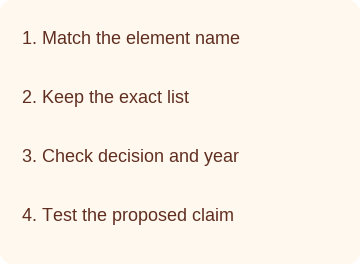
1. Match the element. Copy the complete name, country context and file number. A heading saying “Lunar New Year” alone does not identify which cultural entry is being described.
2. Match the list. Record “Representative List of the Intangible Cultural Heritage of Humanity.” Keep a list’s actual name instead of substituting a looser label that might suggest a monument, a ranking or a different programme.
3. Match the decision and year. Follow the entry’s decision link to 19.COM 7.B.29, then compare its findings with the inscription year shown on the entry. Preserve a national-inventory date in a separate field when it appears.
4. Test the proposed statement. Ask whether the record actually supports it. “Inscribed in 2024” follows from the public entry. “Every family must use this menu” does not. If the claim concerns an origin, an individual result or a present event rule, identify the separate evidence it needs.
For notes, download the blank recognition and claim-check record. It keeps the element, list, decision, different date meanings, proposed sentence and unresolved evidence in separate fields. Fill it in your own notes; it is not a nomination form or a certificate.
Try four interpretation cases
These fictional reading situations test what can be concluded from the named official records. They do not describe completed classes, interviews, applications or UNESCO-approved activities.
Case 1
A draft says, “Chinese New Year began in 2024 because UNESCO listed it that year.” What should change?
Show answer and explanation for case 1
Keep the 2024 inscription fact and remove the unsupported origin claim.
The public entry supplies an inscription year. R.5 refers to earlier national inventory records, but neither source supplies a complete origin chronology. Use “Chinese Spring Festival social practices were inscribed in 2024,” and research a specific historical practice separately.
Case 2
A worksheet says UNESCO recognition requires every Chinese family to eat the same reunion meal and carry out the same ritual. Does the decision establish that rule?
Show answer and explanation for case 2
No. It describes a living social-practice element and transmission; it does not prescribe one household script.
The definition emphasizes living, evolving, community-based heritage. A particular household’s meal and participation should be attributed to that household or source. A festival-wide entry is not evidence that every family follows an identical menu or practice.
Case 3
Two notes give 2006 and 2024 for Spring Festival heritage recognition. Must one be deleted as an error?
Show answer and explanation for case 3
First identify the record attached to each year. Both can be accurate with their own labels.
The decision gives 2006 for the national representative-element inventory and the public entry gives 2024 for the international Representative List inscription. Keeping the record type alongside the date resolves this difference without changing either year.
Case 4
A visitor says a lucky decoration must guarantee prosperity because UNESCO recognized Spring Festival. Does the listing prove that outcome?
Show answer and explanation for case 4
No. Recognition of a practice is not proof that a symbolic wish causes a personal outcome.
The entry describes prayers and social practices. The decision reports cultural and sustainable-development contributions from the nomination information; it does not promise an individual financial result. Explain the symbol as an attributed cultural association, then keep the outcome claim out.
Sources and further reading
- UNESCO: Spring Festival element No. 02126Named Chinese element, 2024 inscription, exact Representative List and social-practice summary. Nomination documents, videos and photo collections are outside this reading guide’s evidence.
- UNESCO Committee decision 19.COM 7.B.29Inscription and the five criterion findings, including the national inventory in 2006 and fourth update in 2021. Findings are attributed to the Committee, without an independent evaluation of nomination attachments.
- UNESCO: What is Intangible Cultural Heritage?Living expressions, transmission, evolving and community-based heritage. This definition does not prescribe one uniform household ritual.